
2026 Pre-Monsoon Aircon Readiness Checklist for Singapore Homes
From May through November, Singapore aircons are pushed harder than the rest of the year. Catch the seven faults we see most often before the first heavy storm.
Why pre-monsoon matters in Singapore
The Southwest Monsoon (June–September) and the Inter-Monsoon transition months that bracket it (April–May, October–November) are the toughest stretch of the year for Singapore aircons. Three things change at once:
- Humidity spikes to 85–95% on most afternoons
- Power loads peak as families spend more hours at home with windows shut
- Outdoor condensers face heavier debris loads from wind-driven dust and leaves
Almost every “aircon emergency” call we get in May–July could have been prevented by a 30-minute readiness check in March or April. Here’s the checklist we run before we hand each customer’s system over to the rain.
The 7-point pre-monsoon readiness check
1. Clear the drain pipe end-to-end
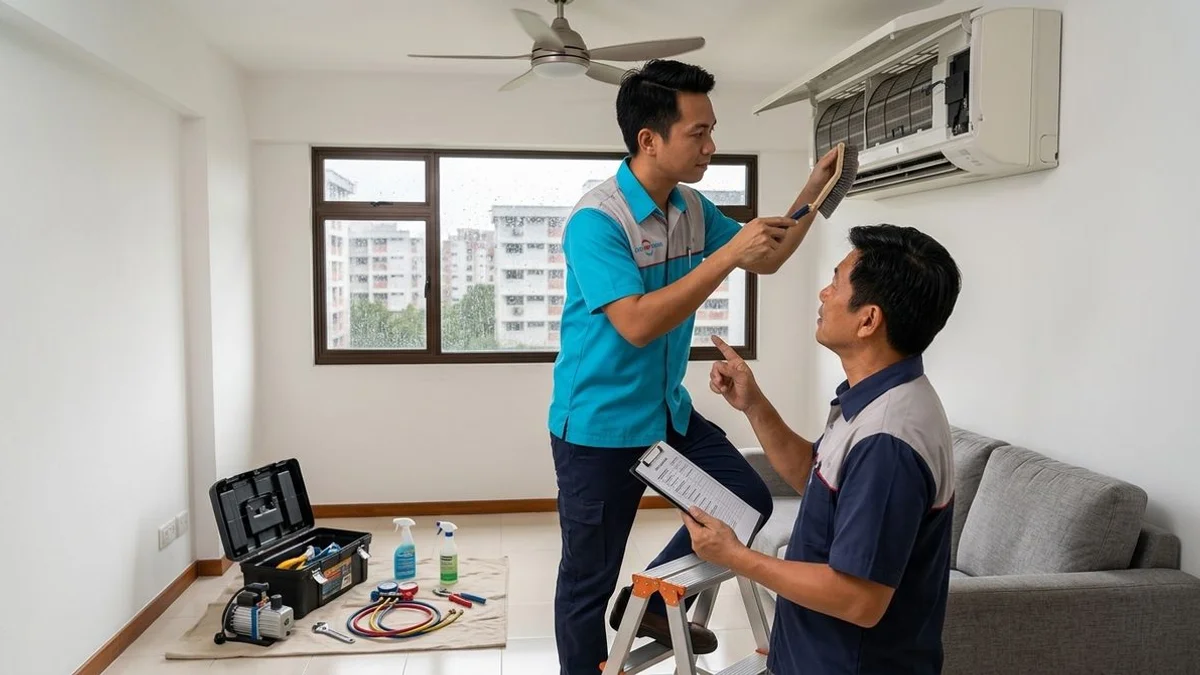
The single most common monsoon-season failure is a blocked drain pipe causing water to drip out of the front of the indoor unit, often onto a TV or sofa. Pre-monsoon is when you flush every drain pipe with pressurised water and verify the slope.
If you’ve ever had a drip mid-monsoon, this is the step that prevents the next one.
2. Chemical wash any unit overdue beyond 18 months
Biofilm grows fastest in high humidity. If your last aircon chemical wash was more than 18 months ago, the monsoon will compound the buildup quickly. We recommend booking the wash in March–April rather than waiting for the smell to develop in June.
3. Inspect the outdoor condenser fins
A condenser blocked with leaves or dust loses heat-rejection capacity, which forces the compressor to work harder and use more electricity. Walk around the outdoor unit, brush off visible debris, and shine a torch through the fins to check for blockage.
4. Tighten condensate routing for storm-grade rain
The outdoor condensate routing — typically a thin pipe routed down the building exterior — can vibrate loose over months of operation. A loose pipe in heavy rain will wash water back toward the wall and into the conduit channel.
A 10-minute inspection of every clip and bracket prevents an awkward conversation with your downstairs neighbour later.
5. Check refrigerant pressure (or have us do it)
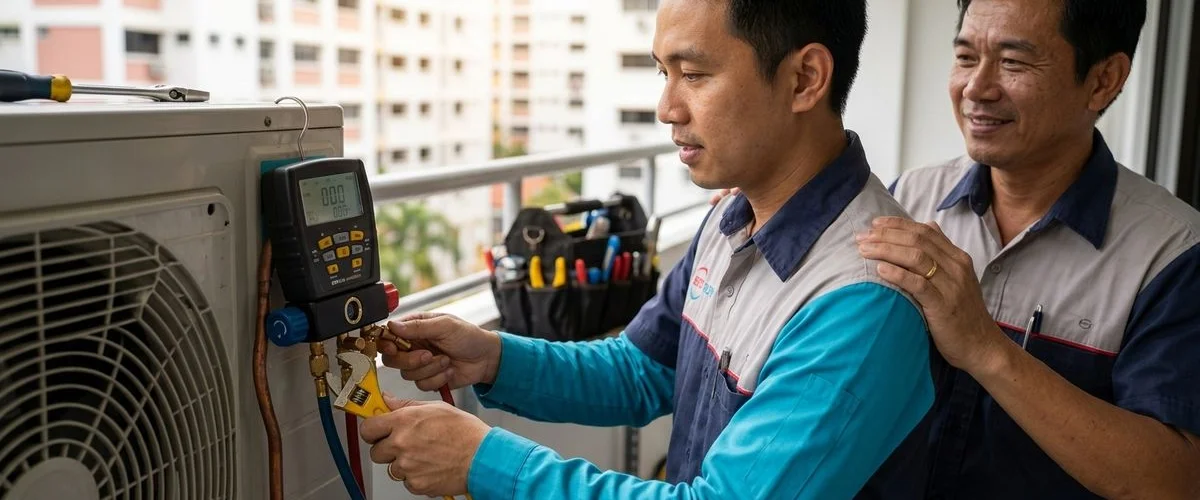
Slow refrigerant leaks accelerate during heavy use. A unit running borderline-low in March will run dry in July. A pressure check at the manifold takes 5 minutes per system; we do it free as part of every aircon repair or standard service.
6. Test the breaker and the GFCI
Heavy monsoon thunderstorms cause grid-side voltage transients. If your aircon’s circuit breaker has not been physically toggled in 12+ months, it can stick. Toggle each aircon breaker manually (off, wait 5 seconds, on) once before the season — and confirm the unit restarts cleanly.
7. Confirm the bracket bolts on the outdoor unit
Most HDB and condo aircons mount on an external bracket. The bracket bolts can corrode in Singapore’s salt-air-meets-humidity environment. A pre-monsoon visual on the bracket bolts (look for rust streaks or visible movement) catches the problem before a typhoon-grade gust shakes things loose.
What we typically find on pre-monsoon visits
Across the 200+ pre-monsoon servicing calls we did between February and April 2025, here’s the distribution of issues we caught and fixed:
| Issue | % of pre-monsoon visits |
|---|---|
| Partially blocked drain pipe | 42% |
| Biofilm buildup needing chemical wash | 38% |
| Refrigerant 10–20% below spec | 14% |
| Outdoor condenser fins clogged | 22% |
| Capacitor reading near failure threshold | 9% |
| Loose bracket bolts | 7% |
Note that percentages exceed 100% because most homes had more than one issue.
Coolbest’s pre-monsoon servicing slot
We open dedicated pre-monsoon slots from mid-March through mid-May each year. The slots fill quickly, especially the Saturday morning blocks.
The full servicing for a 4-fan-coil HDB flat takes about 3 hours and runs S$85 at the standard per-unit rate. Add a chemical wash on units overdue beyond 18 months for best monsoon-resilience.
WhatsApp +65 9182 5233 with your unit count and postal code to book.
A quick word on the alternative
Skipping pre-monsoon prep is a gamble that usually costs more than the prep itself. A drain emergency call during a Sunday thunderstorm in July costs S$120 minimum (plus the cleanup). A burst capacitor during an August week of 90% humidity costs S$120–S$220 plus the lost cooling.
Pre-monsoon servicing isn’t a sales pitch — it’s the hour-long step that keeps your home cool and dry through the harder months.