
Smelly Aircon? How to Get Rid of Musty and Burnt Odours
Aircon smells are diagnostic. Musty means biofilm; sour means bacteria; burnt means switch off now. Here's the smell-to-fix guide for Singapore homes.
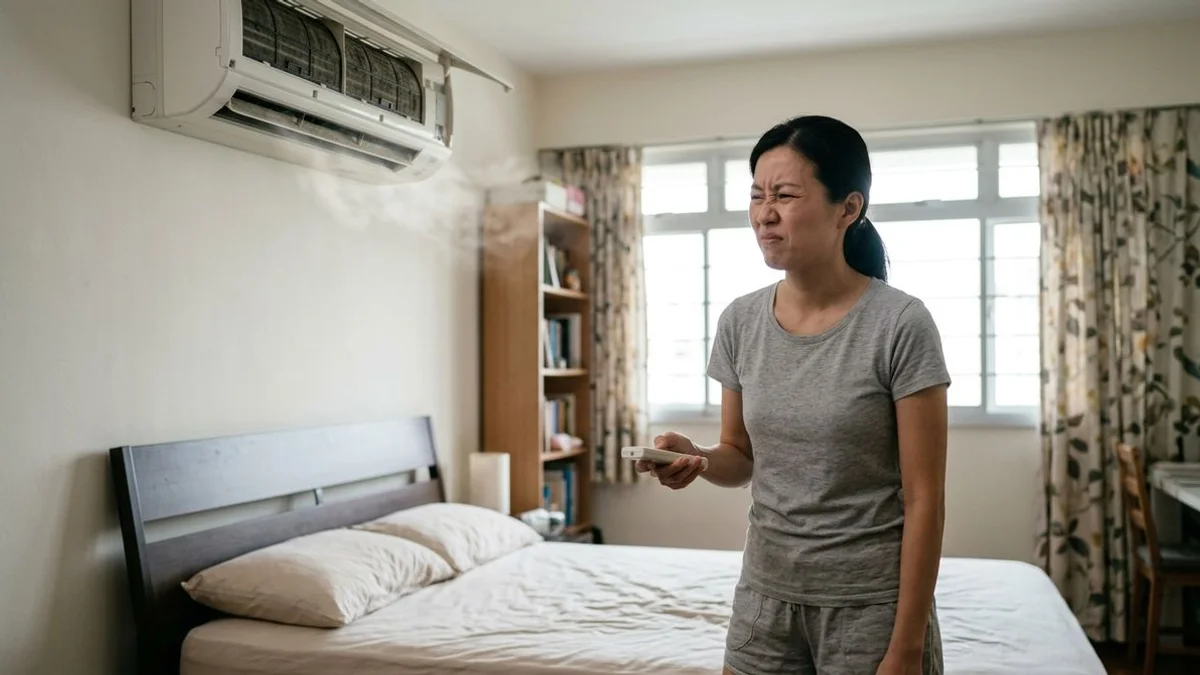
Aircon smells aren’t all the same. The type of smell tells us the type of fault — and the right fix depends on which smell you’re dealing with. Most persistent smells are best resolved with a proper aircon repair or a chemical wash once the cause is identified. This guide walks through the four most common smell types, what each one means, and what the appropriate response is. For related deep-clean context, see our comparison of chemical wash vs overhaul.
Musty smell = mould in the fan coil or drain pan
What it smells like: damp basement, wet socks, old laundry left in the washer. Cause: biofilm and mould growth on the cooling coil, blower, or drain pan. Fix: chemical wash from S$90 per fan coil; chemical overhaul if persistent.
This is the most common aircon smell complaint in Singapore — high humidity, year-round operation, and a moist coil environment make biofilm growth almost inevitable without periodic chemical cleaning.
The smell is usually strongest in the first 5–10 minutes after switch-on (when the airflow disturbs the biofilm), then fades. It returns the next time the unit starts.
A chemical wash addresses surface biofilm. If the smell returns within 1–2 weeks of a wash, an overhaul is the next escalation — the deeper biofilm is in spots only a dismantled clean reaches.
Sour smell = bacteria in the blower or drain pan
What it smells like: rotting fruit, old vinegar, sour milk. Cause: bacterial colonies in the drain pan, often combined with stagnant water. Fix: drain flush + chemical wash, S$90 to S$170 depending on scope.
A sour smell is closely related to musty but with a sharper, more acidic edge. It usually points to bacterial colonies that have established in the drain pan — typically because water has been sitting in the pan for extended periods (drain partly blocked, unit not used regularly).
The fix combines a drain pipe pressure flush (clears the standing water source) with a chemical wash (kills the bacteria on the pan and coil). For severe cases, the drain pan itself may need to be removed and soaked, which falls into chemical overhaul territory.
Burnt smell = electrical overheating, switch off immediately
What it smells like: hot wiring, melting plastic, electrical fire. Cause: overheating motor windings, capacitor, or wiring connection. Fix: same-day diagnosis (S$80) and component replacement (S$120–S$280).
A burnt smell is a stop-everything situation. Switch off the unit at the breaker immediately and do not switch it back on until a technician has diagnosed it.
The most common causes are:
- Burnt motor windings in the indoor blower or outdoor fan motor
- Failed capacitor that has overheated and ruptured
- Loose wiring connection that’s arcing under load
All of these are electrical fire risks. Same-day diagnosis is essential. Most cases are resolved with a single component replacement; in rare cases (severe motor damage), the unit needs to be replaced.
Chemical smell = refrigerant leak
What it smells like: faint ether, slightly sweet, almost not-there. Cause: refrigerant (R32 or R410A) escaping from a copper joint or coil. Fix: leak repair (S$200+) or coil replacement (S$400+).
R32 and R410A refrigerants are largely odourless when fresh, but small impurities and heat-degradation products produce a faint chemical smell at significant leak points. The smell is often described as “almost not-there” but persistent.
A refrigerant smell usually appears alongside cooling weakness (warm air, ice on copper pipe) — the smell alone without cooling impact is rare.
The fix is leak detection (we use electronic leak detectors and bubble solution at suspect joints), then either repair the leaky joint or replace the affected component.
What you should not do
Don’t run an air freshener inside the aircon
Some homeowners spray air fresheners directly into the louvre. This makes the smell worse over time — the fragrance carrier liquids become food for the biofilm.
Don’t use household bleach
Bleach corrodes aluminium and is not safe for aircon coils. Only use products designed for aircon cleaning, applied by a technician who knows the correct dilution.
Don’t ignore a burnt smell
Even if it goes away after switching off and back on, the underlying electrical issue is still there. Get it diagnosed within 24 hours.
Smell-to-fix matrix
| Smell type | Likely cause | Fix | Cost |
|---|---|---|---|
| Musty | Biofilm | Chemical wash (or overhaul) | S$90+ |
| Sour | Bacteria + standing water | Drain flush + wash | S$90–S$170 |
| Burnt | Electrical overheat | Same-day diagnosis + repair | S$200+ |
| Chemical | Refrigerant leak | Leak repair | S$200+ |
When to call a pro
For musty or sour smells, you can wait for your next quarterly service if you’re due in the next 2–4 weeks. Otherwise book a chemical wash.
For burnt smells, switch off and book the same day.
For chemical smells, book within 48 hours.
WhatsApp +65 9182 5233 with the smell type and any other symptoms (warm air, dripping water, noise). We’ll quote a slot inside the hour during business hours.